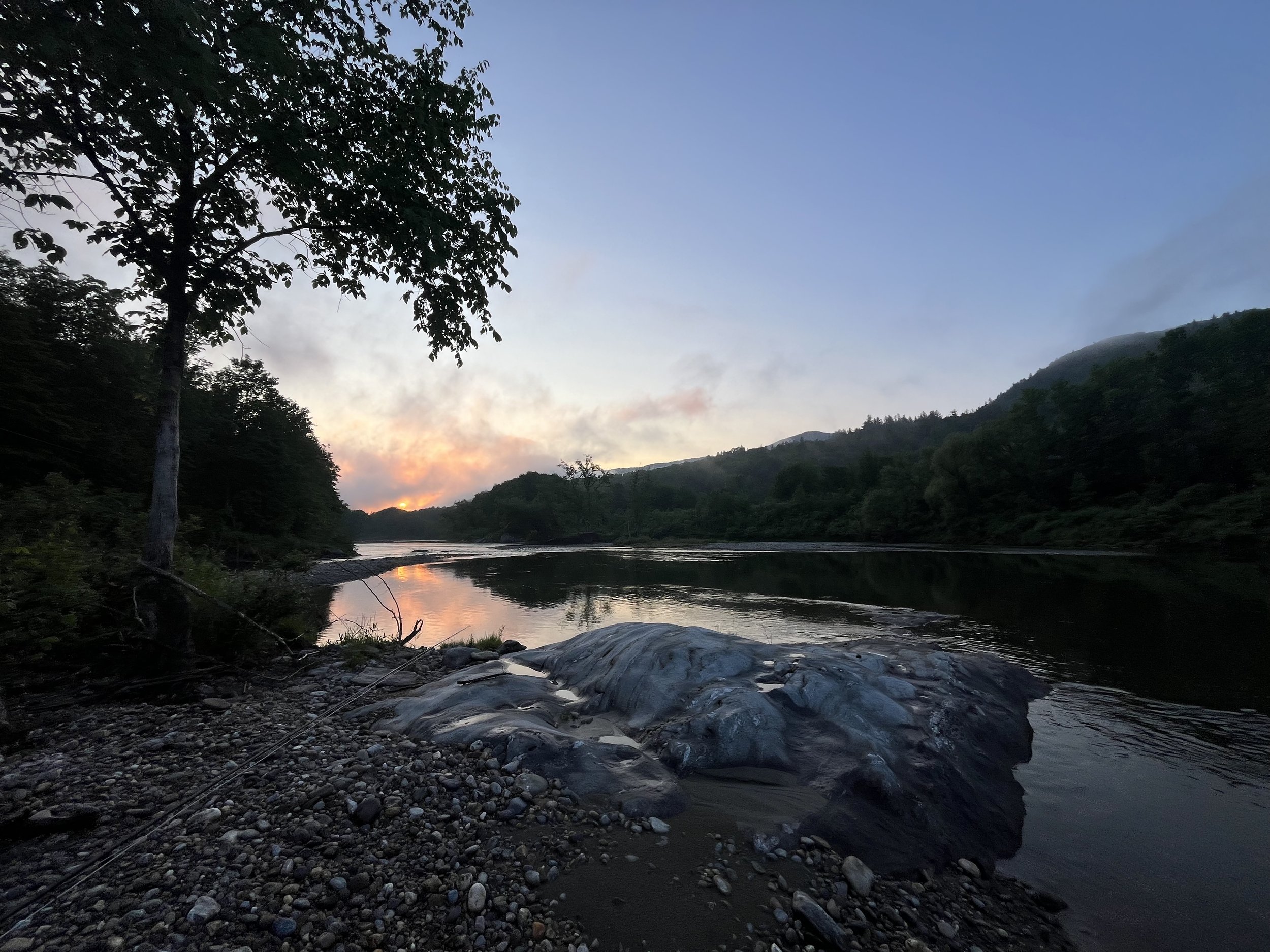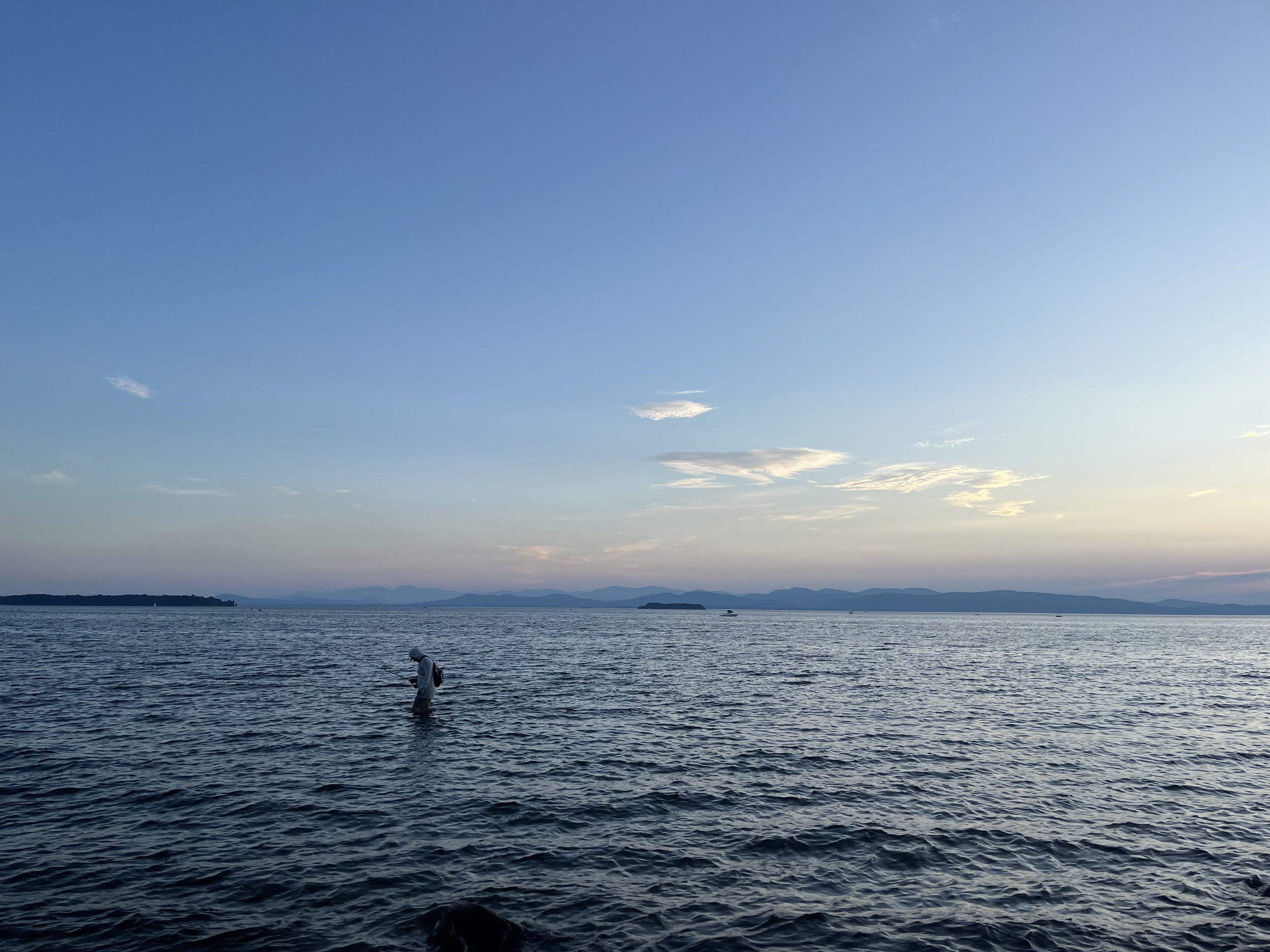
The Champlain Basin
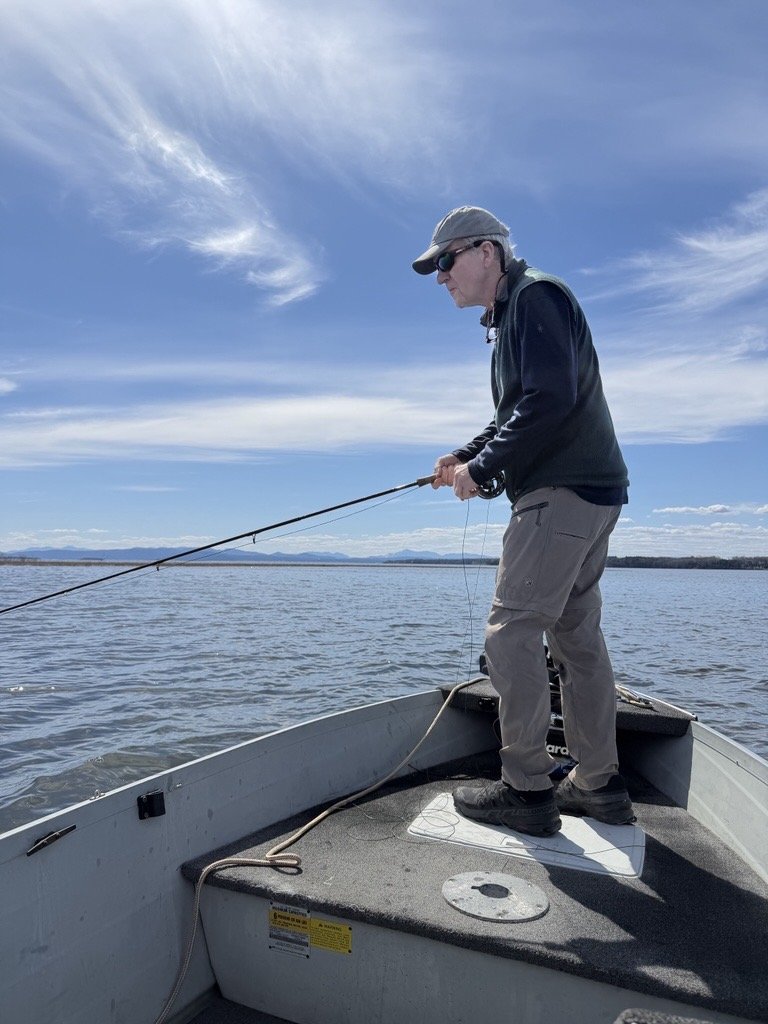
Lake Champlain
The Champlain Basin looked significantly different millions of years ago. Nearly all of New England was covered by a mile thick sheet of ice known as the Laurentide Glacier. As the climate changed over time, the glacier melted and eventually formed what was known as the Champlain Sea, an inlet of the Atlantic Ocean.
As the glacier receded farther north, the land below slowly decompressed, isolating the Champlain sea from the main body of the Atlantic and forming what we know today as Lake Champlain .
Because of its size, Lake Champlain is able to support a wide variety of fish, bird, mammal, and insect species.
From the Mountains to the Lake
Vermont’s Green Mountains and New York’s Adirondacks are home to over 30 major tributaries, and hundreds of inland ponds and lakes.
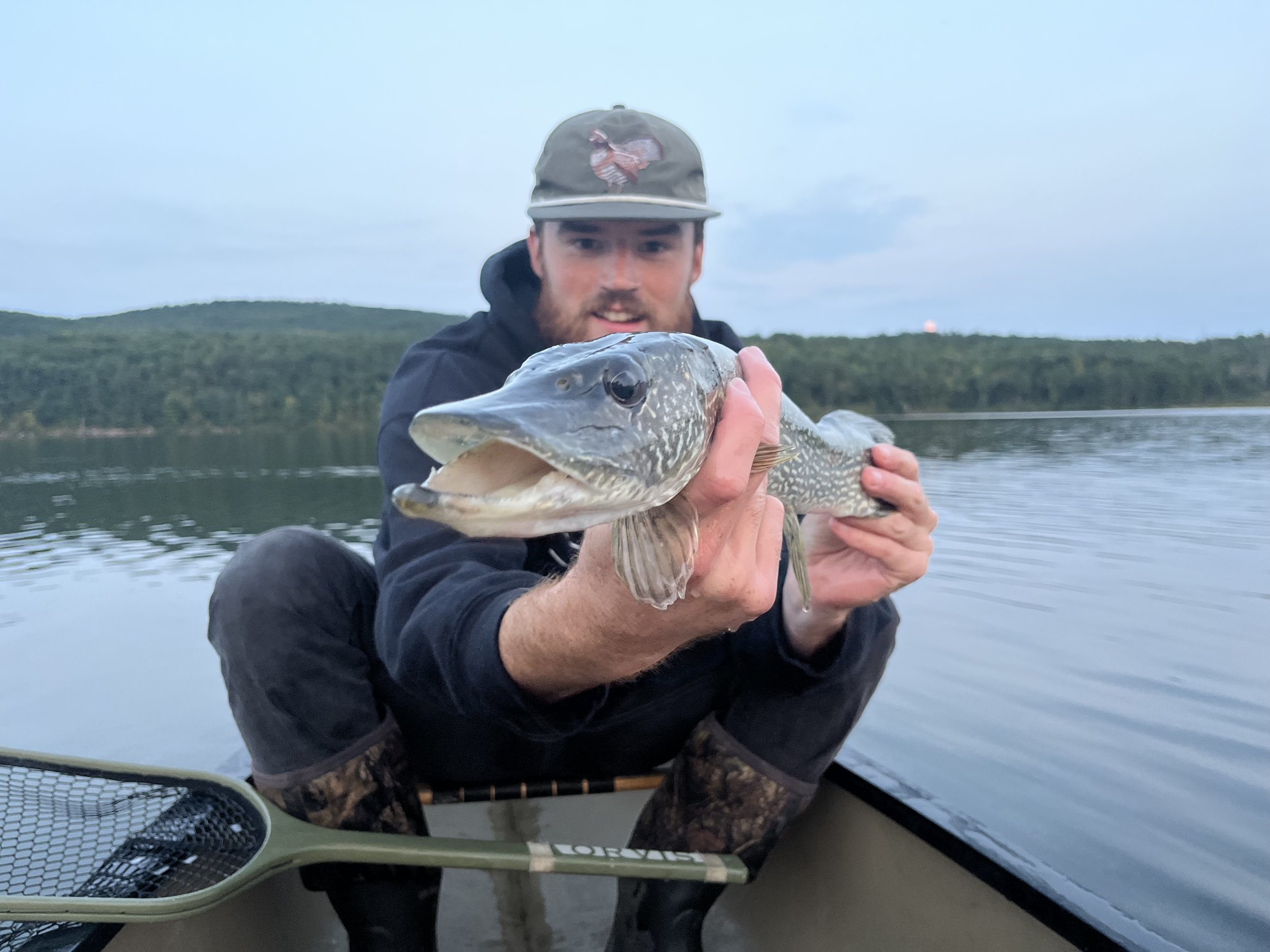
The diversity of the watershed allows for targeting dozens of species on the fly depending on the season and the weather.
Some of our favorite fish to target include Smallmouth and Largemouth Bass, Northern Pike and Pickerel, Trout, Carp, Salmon, and whatever else is biting.